Your product could be flawless and still be losing you the customers you actually want before a single word of your marketing ever reaches them.
You built the brand around clean formulas, honest pricing, and a founder story you actually believe in. Every ingredient was chosen on purpose. Every claim on your label can be backed up. You’ve probably spent months getting the formula right, testing batches, tweaking the fragrance, and making sure the texture feels as good as it performs. And yet, somehow, the customers showing up in your inbox aren’t the ones you pictured when you started this. They ask for discounts before they ask about ingredients. They compare you to the cheapest option on the shelf, not the premium one. They buy once and disappear, instead of becoming the loyal, full-price repeat buyers every founder hopes to build a brand around.
So why does your customer base keep skewing toward bargain hunters who bounce after one order?
Look at your cosmetic packaging before you look anywhere else.
Packaging Talks Before You Do
A customer forms an opinion about your brand in the time it takes to glance at a shelf or scroll past a product photo. That opinion isn’t based on your ingredient list or your mission statement; it’s based on the container. The finish. The weight in the hand. Whether the cap clicks shut with confidence or feels like it might crack. This is the foundation of good cosmetic packaging design: every material and finish choice is a message, whether you intended to send it or not.
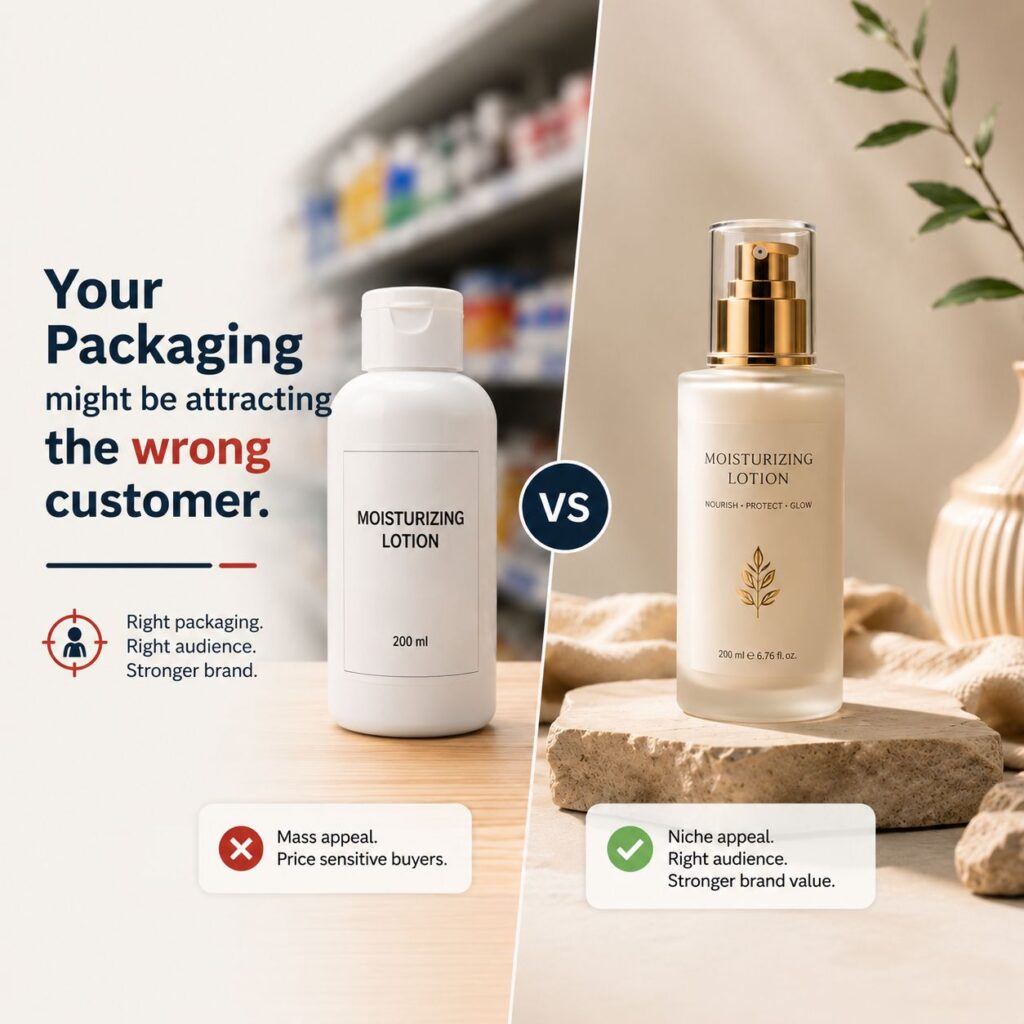
If your beauty product packaging reads “budget”, you will attract budget buyers. Not because your product is budget, because that’s the only signal they received. Customers don’t have access to your formulation sheet or your sourcing standards. All they have in that first moment is what they can see and touch, and they make fast, largely unconscious decisions based on it. That snap judgement then colours everything that follows: how they read your price, how much trust they extend to your claims, and whether they expect quality or expect a deal.
This is true online just as much as it is in person. A product photo on Instagram or a marketplace listing carries the same weight as a shelf glance in a store. The angle, the lighting, and the cosmetic packaging supplier you chose either build instant credibility or quietly undercut it, long before a customer scrolls down to read your description.
The Mismatch Nobody Talks About
Plenty of founders invest heavily in formulation and almost nothing in custom cosmetic packaging. The thinking goes: get the product right, and packaging is just logistics, something to sort out once, cheaply, and move on from.
But packaging isn’t neutral. A thin-walled bottle with a generic pump doesn’t just fail to impress; it actively repositions your brand. Airless bottles, well-weighted glass jars, and precision dropper assemblies tell a premium-minded customer, “This brand gets it,” while a flimsy, off-the-shelf option tells a discount-minded customer, “Perfect, exactly what I expected to pay for.”
This is how brands end up stuck. They raise prices to match their formula quality, but their skincare packaging or cosmetic bottles still whisper clearance rack. The customers who’d pay full price walk past. The ones who stay are the ones haggling for a coupon code. Over time, this compounds: your reviews start skewing toward “good for the price” instead of “worth every rupee”, your repeat-purchase rate stays flat, and you find yourself competing on discounts with brands that never intended to be premium in the first place. That’s not a customer acquisition problem. That’s a packaging-led brand positioning problem.
It also shapes who refers you. Premium customers tend to recommend brands within their own circles, to friends who share their standards and their spending habits. Budget-driven customers refer other budget-driven customers. So the packaging decision doesn’t just affect the sale in front of you; it quietly decides the shape of your customer base a year from now.
What Premium Packaging Actually Signals
It’s not about spending the most. It’s about coherence, every physical detail agreeing with the price point and the story you’re telling. This is where luxury cosmetic packaging earns its reputation and where sourcing choices from a reliable packaging manufacturer start to matter.
- Weight and material — glass and heavier-gauge plastics read as considered, not accidental
- Finish — matte, soft-touch, or frosted cosmetic packaging finishes feel intentional in a way basic gloss doesn’t
- Closure mechanism — a smooth, secure cap, roll-on, or pump is one of the first tactile impressions a customer gets
- Print and label quality — sharp, well-registered printing versus something slightly smudged or off-center
None of this requires a luxury budget. It requires sourcing cosmetic packaging that matches the customer you actually want, not the customer that happened to find you, whether that’s importing directly, working with a trusted cosmetic packaging supplier in India, or building a relationship with a manufacturer who understands your category.
A Quick Gut Check
Picture your product sitting between two others on a shelf: one with clearly premium beauty packaging and one clearly budget. If a stranger had to guess where yours belongs without seeing the price tag, where would they place it? If the honest answer doesn’t match the price you’re actually charging, that gap is quietly costing you sales, margin, and the kind of customer who’d advocate for your brand without being asked.
Ask Yourself This
Would the customer you’re trying to attract be proud to have this on their bathroom counter, in a photo, on a gifting occasion? If the honest answer is no, that’s not a marketing problem. That’s a cosmetic packaging sourcing decision waiting to be revisited.
The right packaging solutions for beauty brands don’t just protect your product; they pre-qualify your audience before they’ve even opened it. Get that one decision right, and every other part of your marketing has to work far less hard to convince the right people to stay.