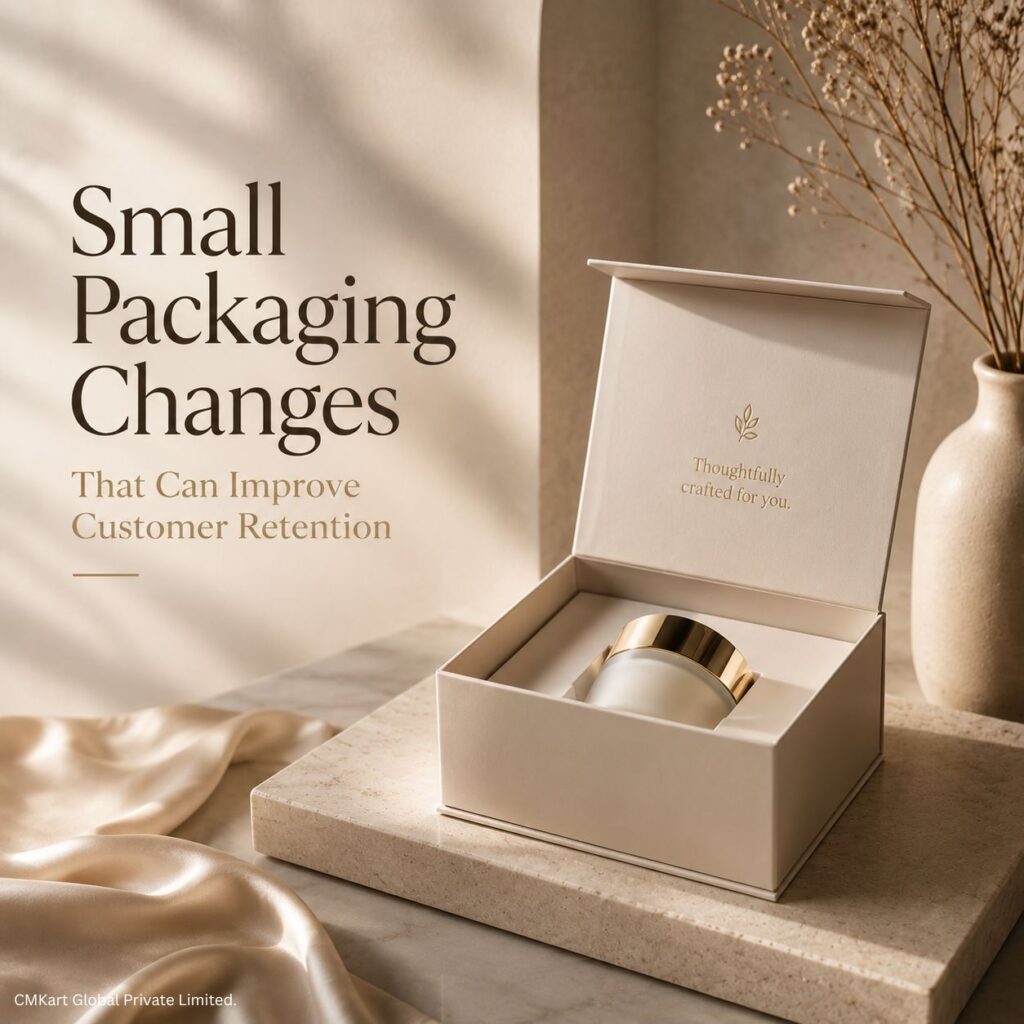
Every brand obsesses over the first sale. The campaign that converts, the offer that lands, and the product that finally gets added to the cart. But here’s the question very few brands ask loudly enough: what happens after?
Customer retention is where businesses stop surviving and start thriving. Yet it remains one of the most underfunded, underestimated areas of brand strategy across industries. Acquiring a new customer costs anywhere between five to seven times more than keeping an existing one. And yet, most of the budget, energy, and attention goes almost entirely toward acquisition.
The brands that grow consistently, not in bursts, but sustainably are the ones that figured out something simple. The second purchase matters more than the first. The third matters more than the second. And the entire game of building a loyal customer base is won or lost in the small, quiet details that happen long after the first order ships.
This blog breaks down what actually drives customer retention, why small changes carry the biggest impact, and what every brand regardless of size or category can do differently starting today.
Why Retention Is the Most Underrated Growth Strategy
There’s a reason the world’s most successful consumer brands don’t talk about retention the way they talk about launches. It doesn’t make headlines. It doesn’t generate hype. But it generates revenue quietly, consistently, and compoundingly.
A customer who purchases three times is exponentially more valuable than three customers who purchase once. They cost less to serve, trust the brand more deeply, and most importantly, they talk. Word-of-mouth marketing doesn’t come from first-time buyers discovering something new. It comes from loyal customers who believe in something enough to recommend it without being asked.
Improving customer retention by just 5% can increase profits by 25% to 95%. That’s not a small number. That’s a business-changing number. And it’s available to every brand willing to shift focus from the top of the funnel to the experience that follows.
The Real Reason Customers Don’t Come Back
Most brands assume customers leave because of price. They assume a competitor offered something cheaper, or a discount wasn’t deep enough, or the market just moved on.
The reality is far less dramatic and far more fixable.
Customers don’t leave because they found something better. They leave because something stopped feeling worth it. And that feeling is rarely the result of one bad experience. It’s the accumulation of small disappointments that nobody noticed, nobody addressed, and nobody fixed.
A question that went unanswered for too long. A product that didn’t perform the same way on order three as it did on order one. A customer experience that felt warm before the purchase and transactional after it. A brand that was everywhere during the launch and invisible once the sale was done.
None of these are dramatic failures. But together, they quietly erode the trust that drives repeat purchases, and trust, once eroded, is extraordinarily difficult to rebuild.
Quality Consistency Is Non-Negotiable
The single most powerful driver of customer loyalty is consistency. Not perfection — consistency.
Customers are remarkably forgiving of brands that get things wrong, as long as the core experience remains reliable. What they are not forgiving of is inconsistency. A product that performs brilliantly the first time and delivers a noticeably different experience the second time creates doubt. And doubt is the enemy of reordering.
Product quality consistency across every batch, every order, and every interaction is the foundation everything else is built on. Before any retention strategy, loyalty programme, or communication effort can work, the product itself needs to show up the same way every single time. That’s the baseline. Everything above it is what differentiates great brands from good ones.
Customer Experience Doesn’t End at the Sale
One of the most common and costly mistakes brands make is treating customer experience as a pre-purchase function. The website, the product page, the checkout flow, these get obsessive attention. What happens after the order is confirmed often gets far less.
Post-purchase customer experience is where loyalty is actually built. The confirmation that arrives quickly and feels considered. The delivery that meets the expectation set at checkout. The first interaction with the product that delivers on exactly what was promised. The follow-up that feels human rather than automated.
These moments don’t cost significantly more to get right. But they signal something crucial to the customer that the brand cares about them beyond the transaction. And that signal is what separates brands with strong customer lifetime value from those constantly chasing the next new customer.
Small Touchpoints Carry Enormous Weight
Retention is not built in big moments. It’s built on small, repeated ones that accumulate over time into either trust or indifference.
The ease of reaching someone when something goes wrong. The personalisation that shows the brand actually remembers who you are. The unboxing experience that makes a repurchase feel like a gift rather than a commodity. The detail that wasn’t advertised but was noticed immediately.
These touchpoints don’t exist in isolation. They exist as a continuous stream of impressions that shape how a customer feels about a brand between purchases. And how they feel between purchases is exactly what determines whether they come back.
Improving customer touchpoints doesn’t require a full brand overhaul. It requires attention to the details that customers notice but rarely articulate and to the gaps between what’s promised and what’s delivered.
Communication That Retains, Not Just Converts
Most brand communication is built for conversion. The campaign, the launch email, and the promotional push are all designed to drive a purchase. Retention-focused communication looks and sounds completely different.
It educates. It adds value outside of a sale. It checks in without asking for anything. It acknowledges loyal customers as the people they are, not just the revenue they represent.
Email marketing for retention, done well, doesn’t feel like marketing at all. It feels like a brand that genuinely wants the customer to get the most out of what they bought, stay informed about what’s coming, and feel like an insider rather than a subscriber. The difference in tone is subtle. The difference in impact is significant.
Building a Community Around the Brand
The brands with the highest customer retention rates in today’s market share one thing in common: they built a community, not just a customer base. A community has a reason to stay beyond the product. It has shared values, shared identity, and a sense of belonging that no competitor can simply replicate by offering a lower price.
Brand community building doesn’t require a massive audience. It requires consistency of voice, genuine engagement, and a clear point of view that customers can align themselves with. When a customer feels like they’re part of something rather than just buying something, the relationship becomes far more durable.
The Bottom Line
Customer retention is not one strategy. It’s the result of every small decision a brand makes about quality, communication, experience, and consistency compounded over time.
The brands that build the most loyal customer bases aren’t necessarily the ones with the best product or the biggest budget. They’re the ones that pay attention to what happens after the sale with the same intensity they bring to everything before it.
Retention is where growth becomes sustainable. And sustainable growth is the only kind worth building.