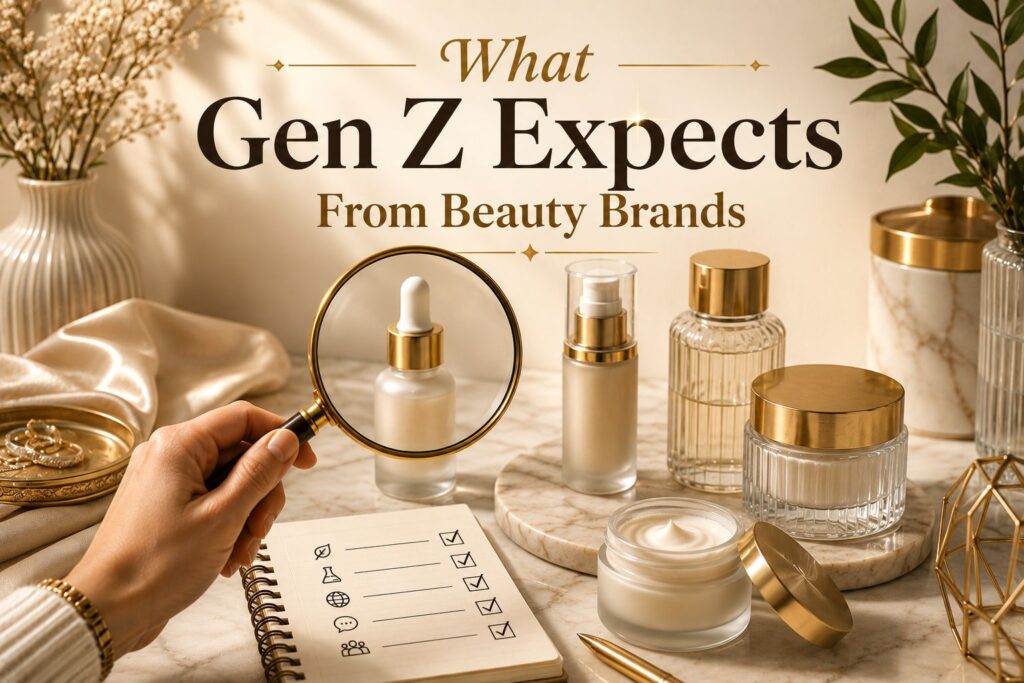
Gen Z doesn’t want your brand story. They want your receipts.
They’ve grown up with more access to information than any generation before them, and that access has changed how they evaluate everything, not just beauty products. A pretty label or a heartfelt caption isn’t enough on its own anymore. Before they buy, they’re comparing notes with friends, scrolling through reviews, and looking for evidence that a brand’s claims actually hold up in practice.
That’s not a criticism; it’s a shift every beauty founder needs to understand. This generation grew up online, surrounded by marketing from birth, and they’ve developed a sharp instinct for spotting the difference between a claim and proof of that claim. They’ve watched brands rise and fall based on a single viral callout, seen “authentic” campaigns exposed as scripted, and learned early on that a polished Instagram feed doesn’t guarantee a good product. For beauty brands built on the old playbook of aspirational storytelling, that’s a real problem. For brands willing to adapt, it’s an opportunity to build the kind of loyalty older marketing tactics never could.
As one beauty industry consultant put it, “This generation isn’t cynical; they’re just informed. They’ve grown up with the tools to check everything, so they do.”
Here’s what’s actually changed and what beauty brands need to do about it.
The End of Storytelling as a Strategy
For years, beauty marketing ran on narrative. A founder’s origin story, an aspirational lifestyle, and a mission statement dressed up in soft lighting. Millennials responded to this. Gen Z is more sceptical of it.
This doesn’t mean storytelling is dead; it means storytelling alone isn’t enough anymore. Gen Z consumers are far more likely to research a brand’s actual claims before buying, cross-checking ingredient lists, sourcing information, and certifications against what the marketing says. A beautiful brand narrative that doesn’t hold up under a five-minute Google search does more damage than no story at all.
What this means practically: Every claim a brand makes – clean, sustainable, cruelty-free, or dermatologist-tested – needs to be backed by something checkable. Vague language creates suspicion. Specific, verifiable language builds trust.
Transparency Is Non-Negotiable, Even When It’s Unflattering
One of the most consistent patterns among Gen Z consumers is a preference for honesty over polish. Brands that openly acknowledge limitations – “We’re still working toward fully recyclable packaging” or “This product isn’t vegan yet; here’s our timeline” often earn more trust than brands that stay silent on the same issues.
This is a significant departure from traditional brand messaging, which tends to avoid admitting gaps. For Gen Z, an unglamorous but honest answer beats a vague or evasive one almost every time.
Where This Shows Up Most
- Ingredient sourcing and formulation claims
- Sustainability and environmental impact
- Pricing transparency (why a product costs what it costs)
- Responses to criticism or negative reviews
Community Signals Matter More Than Brand Messaging
Gen Z trusts other consumers more than they trust brands. This is well-documented, but it’s worth restating because of how deeply it changes the marketing equation. A brand’s own claims carry less weight than what real customers are saying in comment sections, reviews, and community spaces.
This means the comment section is no longer just a customer service channel; it’s a trust signal in its own right. A brand that engages authentically, responds to hard questions publicly, and doesn’t over-moderate its community tends to earn more credibility than one with a flawless but clearly curated online presence.
What this means practically: Resist the urge to over-manage the narrative. A few honest, imperfect reviews sitting alongside genuine engagement builds more trust than a comment section scrubbed clean of anything critical.
Speed and Accessibility Over Perfection
Gen Z consumers expect brands to be reachable and responsive. A brand that answers a DM about ingredient sourcing within a day builds more goodwill than one running a flawless ad campaign with no direct line to a real person.
This is partly a byproduct of how this generation communicates generally: fast, direct, often through informal channels like Instagram or TikTok comments rather than email. Beauty brands that treat these channels as an afterthought are missing where a large share of purchase decisions actually get made.
Values Have to Show Up in the Business, Not Just the Messaging
There’s a growing gap between brands that talk about their values and brands that actually operate by them. Gen Z consumers are unusually good at spotting the difference, largely because they’ve grown up watching brands say one thing publicly and do another privately. A sustainability pledge that isn’t reflected in sourcing decisions, or a “body positive” campaign that isn’t reflected in size ranges, gets noticed and called out quickly.
This doesn’t mean every beauty brand needs to be perfect on every value it claims to hold. It means the gap between what’s said and what’s done needs to be small and shrinking rather than static or widening. Brands that treat their stated values as an ongoing commitment with visible progress over time fare far better than brands that treat them as a one-time marketing campaign.
For founders, this often means slowing down on certain claims until the operational reality can actually support them. It’s a harder discipline than writing good copy, but it’s the difference between a value that reads as genuine and one that reads as a slogan.
Adapting to a Changing Market
The beauty industry has always evolved alongside its customers, and this moment is no different. Brands that pay attention to how expectations are shifting tend to stay relevant, while those that hold onto older approaches often struggle to keep pace. Understanding a new generation of buyers isn’t just useful for marketing purposes; it’s part of building a business that can grow sustainably over time.
Change of this kind rarely happens overnight, and beauty brands that approach it thoughtfully tend to see better long-term results than those that make sudden, reactive shifts. Taking the time to understand what customers genuinely care about, rather than reacting to trends alone, generally leads to stronger and more lasting relationships with the people a brand is trying to reach.
What This Means for Beauty Brands Going Forward
The brands earning genuine loyalty from Gen Z aren’t necessarily the ones with the biggest ad budgets or the most polished campaigns. They’re the ones willing to be questioned and willing to answer honestly.
This requires a real shift in how beauty brands operate, not just how they market. Transparency needs to extend into sourcing decisions, formulation choices, and business practices, because Gen Z consumers are increasingly willing to dig past the marketing layer to check.
For founders building beauty brands today, the takeaway isn’t complicated, even if the execution is demanding: say less that you can’t back up, and back up more of what you say.