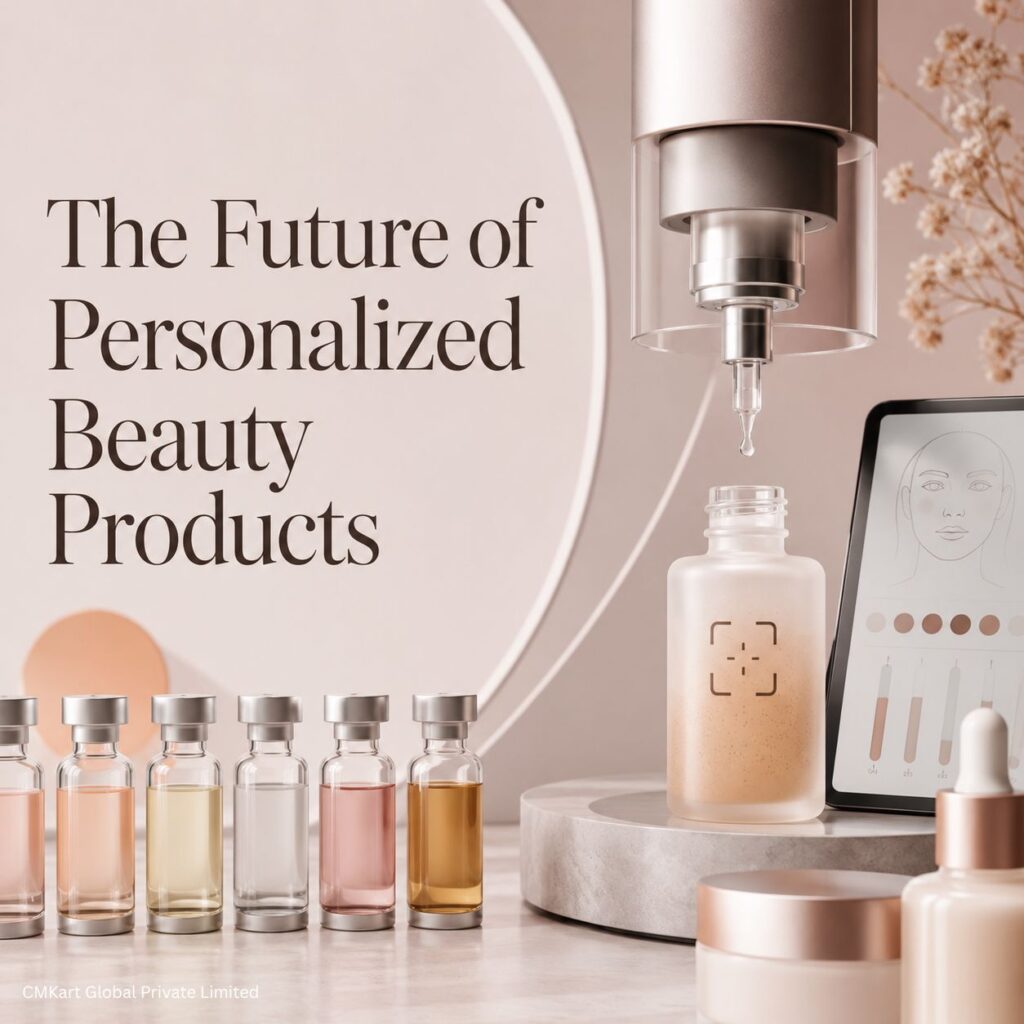
The Future of Personalized Beauty Products
For most of its history, the beauty industry has operated on a simple premise: develop a formula that works reasonably well for a broad range of people, manufacture it at scale, and sell it to everyone. It was an efficient model, and it worked; mass production kept costs low and distribution simple, and it built some of the world’s biggest beauty brands.
But that’s no longer enough. Today’s consumers don’t want a product that works for most people. They want a product that works for them for their specific skin, their specific concerns, their specific routine. This shift from mass production to mass personalisation is quietly becoming one of the defining forces in the beauty industry, and it’s worth understanding both why it’s happening and where it’s headed.
What Does “Personalised Beauty” Actually Mean?
Personalised beauty refers to products, formulations, or experiences tailored to an individual’s specific skin type, concerns, environment, genetics, or even lifestyle. This can range from relatively simple customisation, choosing a moisturiser based on a skin quiz, to highly advanced approaches like DNA-based formulations or AI-generated skincare routines built from facial scans.
What ties all of these together is a move away from generic, one-size-fits-all products toward solutions that feel individually designed.
Why Personalization Is Gaining Momentum
A few forces are driving this shift simultaneously.
Changing consumer expectations. Younger consumers, particularly Gen Z and millennials, have grown up customizing nearly everything in their lives sneakers, playlists, meal subscriptions. They expect that same level of individual attention from the products they put on their skin.
Better data and technology. Tools like AI-powered skin diagnostics, smartphone-based skin analysis, and machine learning algorithms have made it far easier and cheaper to assess individual skin needs at scale. What once required a dermatologist’s visit can now happen through an app.
A more informed customer base. Consumers today are reading ingredient lists, researching actives, and asking pointed questions about whether a product actually suits their skin type, tone, or sensitivity. Generic marketing claims no longer hold up against this level of scrutiny.
Wellness and self-care culture. Skincare has increasingly become part of a broader self-care identity. People don’t just want effective products; they want products that feel like they were made with their specific self in mind.
The Technologies Powering This Shift
Several innovations are making personalized beauty commercially viable, not just a niche luxury offering.
AI-driven skin diagnostics use image analysis to assess hydration, texture, pigmentation, and other skin markers, then recommend or generate tailored formulations. Subscription-based customization models allow brands to adjust formulas over time based on changing skin conditions, seasons, or feedback. Modular and made-to-order manufacturing techniques are making small-batch, customized production more economically feasible than it was even five years ago. DNA and microbiome-based formulation, while still emerging, is pointing toward a future where skincare is built on biological data rather than broad skin-type categories.
Together, these technologies are lowering the barrier for brands of all sizes to offer some degree of personalization, not just the deep-pocketed players who can afford bespoke R&D.
Why Packaging Has to Evolve Alongside the Product
One detail often gets overlooked in conversations about personalized beauty: packaging.
When a brand promises a product made specifically for an individual customer, but ships it in identical, generic packaging used across its entire range, there’s a disconnect. The product may be personalized, but the experience doesn’t feel that way.
This is pushing packaging to become more flexible and modular. Brands need smaller minimum order quantities so they can produce limited or custom batches without overcommitting. They need components that can be mixed, swapped, or adapted across different product lines and SKUs. And they need design and labeling systems that can support variation different colors, sizes, or finishes without disrupting production timelines or driving up costs.
In other words, packaging is no longer just a vessel for the product. It’s becoming part of how personalization is communicated and experienced.
Challenges Brands Should Be Aware Of
Personalization isn’t without its complications. Custom formulations and packaging often come with higher production costs per unit, at least initially. Inventory and supply chain management become more complex when SKUs multiply. Regulatory and labeling requirements can vary depending on how customized a formulation becomes. And perhaps most importantly, personalization has to be backed by genuine efficacy consumers can tell the difference between real customization and a marketing gimmick dressed up as one.
Brands that succeed in this space tend to be the ones that treat personalization as a long-term capability to build, rather than a one-time feature to launch.
What This Means for Emerging Beauty Brands
For founders building new beauty brands, this shift presents both an opportunity and a strategic question. The opportunity is clear: personalization allows smaller, newer brands to compete on relevance and customer experience rather than just price or shelf space. A well-executed personalized offering can build the kind of loyalty that’s difficult for larger, more generic competitors to replicate.
The strategic question is how to build the operational flexibility in formulation, manufacturing, and packaging needed to deliver on that promise without overextending resources early on. This often means starting with smaller batch sizes, working with manufacturing and packaging partners who can support low minimum order quantities, and designing systems that can scale gradually as customer demand becomes clearer.
Looking Ahead
Personalized beauty is no longer an emerging trend on the horizon; it’s actively reshaping how products are formulated, marketed, and packaged across the industry. As technology continues to make individual-level customization more accessible and affordable, the gap between brands that offer it and those that don’t will likely widen.
For founders entering this space, the brands most likely to thrive won’t necessarily be the ones with the biggest catalogs or the lowest prices. They’ll be the ones who understood early that personalization is a promise made to the customer, and built every part of their operation formula, experience, and packaging alike – to keep it.