While others with equally brilliant products post into silence. Here’s what separates the brands that explode from the ones that fade.
“The beauty industry isn’t too crowded. It’s too generic. There is always room for a brand with a clear point of view.”
Every week, a new indie beauty brand seems to emerge from nowhere and completely take over your feed. Millions of views. Thousands of orders. A waitlist before they’ve even officially launched. Meanwhile, hundreds of other brands, with equally good, sometimes even better, products are posting into complete silence.
What separates them?
Over the years, we’ve worked with cosmetic brands at every stage of their journey from first-time founders packaging their very first product, to labels scaling to modern trade shelves across India. And across all of them, we’ve noticed a pattern that is impossible to ignore.
It’s not the formula. It’s rarely the price. It’s not even the budget. The brands that blow up on Instagram are doing something far more intentional and far more accessible than most founders think. Let’s break it down.
What the brands that “blow up” are actually doing differently?
1. They lead with a story, not a product
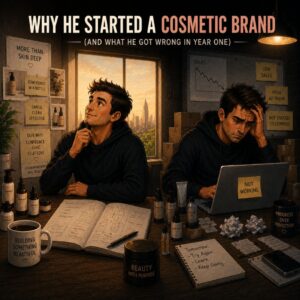
The brands that win on Instagram don’t open with “Buy our serum.” They open with something far more powerful: “I struggled with acne for 10 years, and no product on the market understood my skin. So I made one.”
That’s not marketing. That’s a confession. And people are drawn to vulnerability and honesty like nothing else, especially in a category as personal as beauty.
Consumers today, particularly Gen Z and millennials, don’t just buy beauty products. They buy into the person behind them. They want to know why you started, what gap you saw, what problem you personally lived with. Your origin story is the most underused and most powerful marketing asset your brand has. And the best part? It costs nothing to share.
2. Their packaging is their content
Scroll through any viral beauty reel and pay close attention in most cases, the product itself is doing all the talking. A distinctive bottle silhouette. A satisfying, layered unboxing experience. A colour palette that pops brilliantly against a white background. A texture that looks genuinely irresistible on camera.
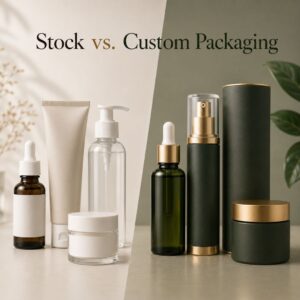
Smart founders today design for the scroll before they design for the shelf. They understand that in 2025, packaging is not just a container that protects a product, it is the first piece of content their brand ever creates.
It is what gets photographed, shared on stories, featured in hauls, and talked about in comment sections. Brands that grasp this invest in packaging that tells a story before a single word is read. In a world where every product is a potential post, your packaging is your silent brand ambassador working 24 hours a day, 7 days a week, for free.
Packaging is no longer just a container. It is the first piece of content your brand ever creates and it works 24/7 without a marketing budget.
3. They build community before they build inventory
The brands that sell out on their launch day didn’t start selling on launch day. They started talking to their audience three, sometimes four, months before the first product was even ready to ship.
Behind-the-scenes development reels. “Help us pick our shade names” polls. “What skin concern should we solve next?” stories. Sneak peeks of the packaging in progress. Founder diaries walking followers through every uncertainty and decision.
By the time the product dropped, the audience didn’t feel like customers. They felt like co-founders. And co-founders don’t just buy, they evangelize. They share. They defend the brand in comment sections. They bring five friends along.
You don’t need a large following to do this. You need genuine, consistent conversations with the right people. Start small. Start honest. Start early.
4. They pick one thing and go impossibly deep
The most common strategic mistake we see new beauty brands make is trying to be everything to everyone from day one. A Moisturiser, a serum, a lip gloss, a face wash all at once, all positioned for “everyone who wants good skin.”
The brands that blow up do the exact opposite. They own a niche so specific it sounds almost too narrow to be viable.
Example:-
- Skincare formulated specifically for South Asian skin tones
- Lip care designed for naturally deeper lip tones
- Clean, minimal beauty for first-time skincare users
- Haircare for Indian women with hard water damage
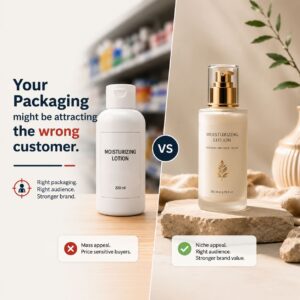
Niche is not a limitation. Niche is a superpower. When your ideal customer encounters your brand and immediately thinks “this was made for me”, you have already won half the battle. No paid advertisement in the world can replicate that feeling of being truly seen.
Niche is not a limitation. Niche is a superpower. When your customer thinks ‘this was made for me’ — you’ve already won
5. They treat every operation as a marketing moment
The viral brands understand something most early-stage startups completely miss: the customer experience doesn’t end at checkout. In many ways, it begins there.
Fast, reliable delivery. Beautiful, thoughtful packaging that feels considered rather than generic. A handwritten thank-you note tucked inside. A QR code leading to a Personalised skincare guide. Tissue paper in brand colours. A small, unexpected freebie that genuinely delights.
These are not logistics decisions. They are marketing decisions dressed up as operations.
The unboxing video a customer films and spontaneously posts is worth more than a dozen paid influencer campaigns. Word-of-mouth from a genuinely delighted customer is the single most powerful growth engine a brand can have and it begins with how you treat someone after they have already paid. Every touchpoint is an opportunity to earn loyalty, generate content, and receive a referral, at zero additional advertising spend.
6. They are consistent, not just creative
Here is the one insight that almost never gets discussed: the brands that sustain their growth are not always the most creative ones. They are the most consistent ones.
Posting regularly, even during slow weeks. Showing up authentically even when the numbers feel small. Replying to every comment in the early days, building relationships one person at a time. Testing, learning, iterating without abandoning the strategy after two weeks of underwhelming views.
Virality looks like an overnight event from the outside. Almost every brand that “blew up” had been quietly, patiently building for months, sometimes years before the algorithm finally took notice.
Consistency is the least glamorous ingredient in the growth formula. It is also, without question, the most important.
The bigger picture: India’s beauty revolution
India is in the middle of a genuine beauty revolution. Homegrown indie brands are competing with global giants and consistently winning on trust, relatability, and authenticity. Consumers across the country are actively choosing local, story-driven brands over imported mass-market alternatives.
The market is not too crowded. It is too generic. There is always room always for a brand with a clear point of view, a founder with an honest story, and a product that performs as well as it photographs.
But opportunity alone does not build a brand. Clarity does. Execution does. Showing up every single day does.
If you are building a cosmetic brand right now, the question is never “will people buy beauty products?” They will, the market data is clear on that. The question is simply this: why would they choose yours? Answer that with complete honesty, then build everything your formula, your packaging, your content, your community around that single answer. Everything else follows.
What this means for your packaging strategy
Every insight above points to one underlying truth: in the modern beauty landscape, the line between product and marketing has completely dissolved. Your packaging is not separate from your brand story, it is your brand story, made physical and tangible.
The founders who understand this don’t treat packaging as a last-minute decision made after the formula is finalised. They treat it as one of the first and most important creative choices their brand will ever make. They think about how it will look in a flat lay photograph. How it will feel in someone’s hands during unboxing. What emotion it will evoke before a single ingredient is read.
That is the level of intentionality that separates the brands that blow up from the ones that stay invisible. And it starts, as most good things do with asking the right question from the very beginning.