Struggling to find a reliable cosmetic packaging supplier or the right formulator for your beauty brand? We share honest industry insights from over a decade of experience in cosmetic packaging solutions.
You’ve got the idea. You’ve got the brand name. You’ve probably got a mood board, a target customer, maybe even a logo. And then reality hits.
Because building a cosmetic product a real one, that sits on a shelf, that customers trust, that survives a retail audit requires two things nobody warned you about. Two searches that will test your patience, your budget, and your faith in the process more than almost anything else.
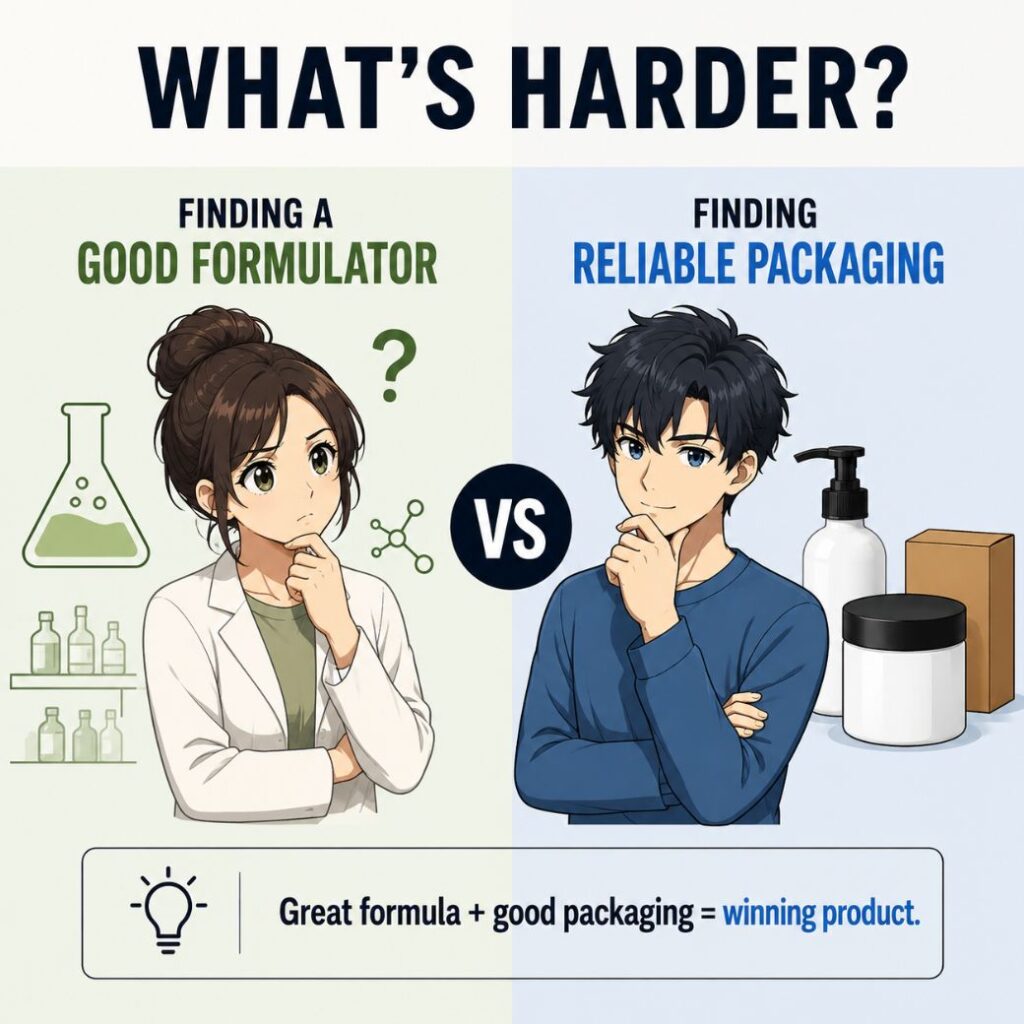
Finding the right cosmetic formulator. And finding a cosmetic packaging supplier you can actually rely on.
We’ve spent over a decade on the packaging side of the beauty industry, working with brands at every stage the founder mixing samples in her spare bedroom, the mid-size label expanding into new markets, the established name trying to clean up a supply chain that grew faster than anyone planned. And in every single conversation, these two challenges come up. Not occasionally. Constantly.
So we decided to write about them honestly not as a sales pitch, but as people who’ve sat across the table from enough founders to know exactly where the pain lives.
Why Finding the Right Cosmetic Formulator Is Harder Than It Looks
From the outside, finding a cosmetic formulator seems straightforward. You need someone who can bring your product vision to life a cream, a serum, a balm. Surely there are labs for that?
There are. But here’s what beauty brands actually run into during the formulator search:
The gap between technical expertise and creative vision. Not every cosmetic formulator understands brand intent. Many labs are highly capable from a chemistry standpoint but struggle to translate a founder’s vision a texture, a sensory experience, a specific finish into something that actually feels right. You can end up with a formula that’s technically correct but completely wrong for your brand.
Inconsistent regulatory knowledge across markets. Whether it’s EU cosmetic regulations, FDA guidelines, or clean beauty standards for a specific retailer your formulator needs to understand the compliance requirements of every market you intend to sell in. Finding one who does, at an early-stage budget, is genuinely difficult.
Scalability is never guaranteed. A cosmetic formulator who works beautifully at 500 units may not be equipped for 50,000. Many beauty brands discover this too late when they’re ready to scale, they have to restart the formulation process with a new lab entirely. That costs time, money, and sometimes the formula itself changes in ways consumers notice.
Formula IP ownership is a minefield. Who actually owns the formula? Some labs retain intellectual property rights unless explicitly negotiated otherwise. Founders who don’t ask upfront can find themselves locked out of their own product or paying significant fees to transfer ownership down the line.
Timelines compound faster than expected. Cosmetic formulation takes time. But when communication is slow and feedback loops stretch to weeks, planned launch dates quietly collapse. Most early-stage founders underestimate how long the formulation process truly takes and build launch plans around optimistic timelines that rarely hold.
Finding the right cosmetic formulator isn’t just about chemistry. It’s about finding a development partner who understands your brand, your target market, your compliance requirements, and your growth trajectory all at once.
Why Finding a Reliable Cosmetic Packaging Supplier Is Just as Challenging
In our world cosmetic packaging we are obviously close to this challenge. We live it with our clients every day. And we’ll say it plainly: sourcing reliable cosmetic packaging is one of the most underestimated operational challenges in the beauty industry.
Here’s what makes the cosmetic packaging supplier search so layered:
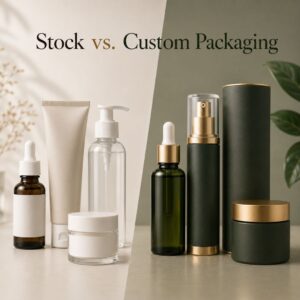
MOQs that don’t match where most brands actually are. Minimum order quantities remain one of the biggest barriers for emerging beauty brands. Custom cosmetic packaging often requires tooling investments and MOQs completely out of reach for indie founders. Stock packaging solves the quantity problem but limits brand differentiation and in beauty, packaging is a core part of brand identity. The right middle ground is genuinely hard to find.
Packaging quality that drifts across production runs. This is one of the most common issues we hear about from beauty brands sourcing cosmetic packaging. A supplier delivers a flawless first run. The brand is thrilled. Then run two arrives with a slight colour variation. Run three has inconsistent closures. By run four, the brand is stuck because switching cosmetic packaging suppliers means starting over, and they’re already in market. Consistency across production runs is far rarer than it should be.
Lead times that shift without warning. In a global cosmetic packaging supply chain, lead times are a moving target. What was eight weeks becomes fourteen. What was fourteen becomes twenty-two. For beauty brands managing retail commitments or launch calendars, unpredictable lead times aren’t just frustrating they’re commercially damaging.
Tooling ownership traps that lock brands in. Custom cosmetic packaging molds and tooling are expensive to develop. But many brands don’t realise they’ve paid to develop tooling that technically belongs to the factory. When the relationship breaks down or when they simply want to move to a different packaging supplier they’re either locked in or forced to start from scratch.
Specification gaps that only show up at scale. Working across time zones and language barriers is a daily reality in cosmetic packaging sourcing. Specs get misinterpreted. Approved samples don’t match production runs. And by the time a full shipment arrives wrong, the cost in units, time, and missed retail windows is enormous.
The “good on paper” cosmetic packaging supplier problem. Certifications, sample quality, and sales conversations can all look great. The real test is what happens on run three, when the account manager who sold you has moved on and you’re dealing with a production floor you’ve never visited.
What a Decade in Cosmetic Packaging Has Taught Us
We’re a cosmetic packaging organisation but our clients come to us carrying both of these frustrations. And over the years, we’ve drawn some consistent conclusions:
Both the formulator search and the cosmetic packaging supplier search require more due diligence than most beauty brands budget time for. Rushing either one out of excitement, financial pressure, or pure optimism almost always creates expensive problems downstream.
Vetting a partner isn’t a one-time event. It’s an ongoing process. The best cosmetic packaging supplier relationships we’ve seen are built on transparent communication, documented quality standards, and a willingness on both sides to flag problems early rather than quietly absorb them.
Your cosmetic packaging partner should feel as invested in your brand’s success as your formulator does. Not just on the first order but on every order that follows.
Building a Beauty Brand That Lasts: Start With the Right Foundations
If you’re in the early stages of building a cosmetic brand, don’t underestimate either of these searches. Give the formulator search and the cosmetic packaging sourcing process the time, rigour, and budget they deserve.
The beauty brands that make it aren’t always the ones with the best formulas or the most stunning bottles. They’re the ones who did the unglamorous work early who asked the hard questions, vetted the right partners, and built supply chains that could hold up when the pressure came.
That foundation starts here.
Frequently Asked Questions
What should I look for in a cosmetic formulator? Look for regulatory knowledge across your target markets, clear IP ownership terms, scalability beyond your initial production volume, and a track record with brands in your category.
How do I find a reliable cosmetic packaging supplier? Start with sample runs before committing to large orders. Clarify tooling ownership in writing. Ask for references from brands they’ve supplied across multiple production runs not just the first.
What is a realistic MOQ for cosmetic packaging? MOQs vary widely depending on whether you’re using stock or custom packaging. Stock cosmetic packaging can start from a few hundred units; custom packaging typically requires 3,000–10,000+ units depending on the component type.
How long does cosmetic formulation take? A standard cosmetic formulation process typically takes 3–6 months from initial brief to approved formula, depending on complexity, number of revision rounds, and stability testing requirements.