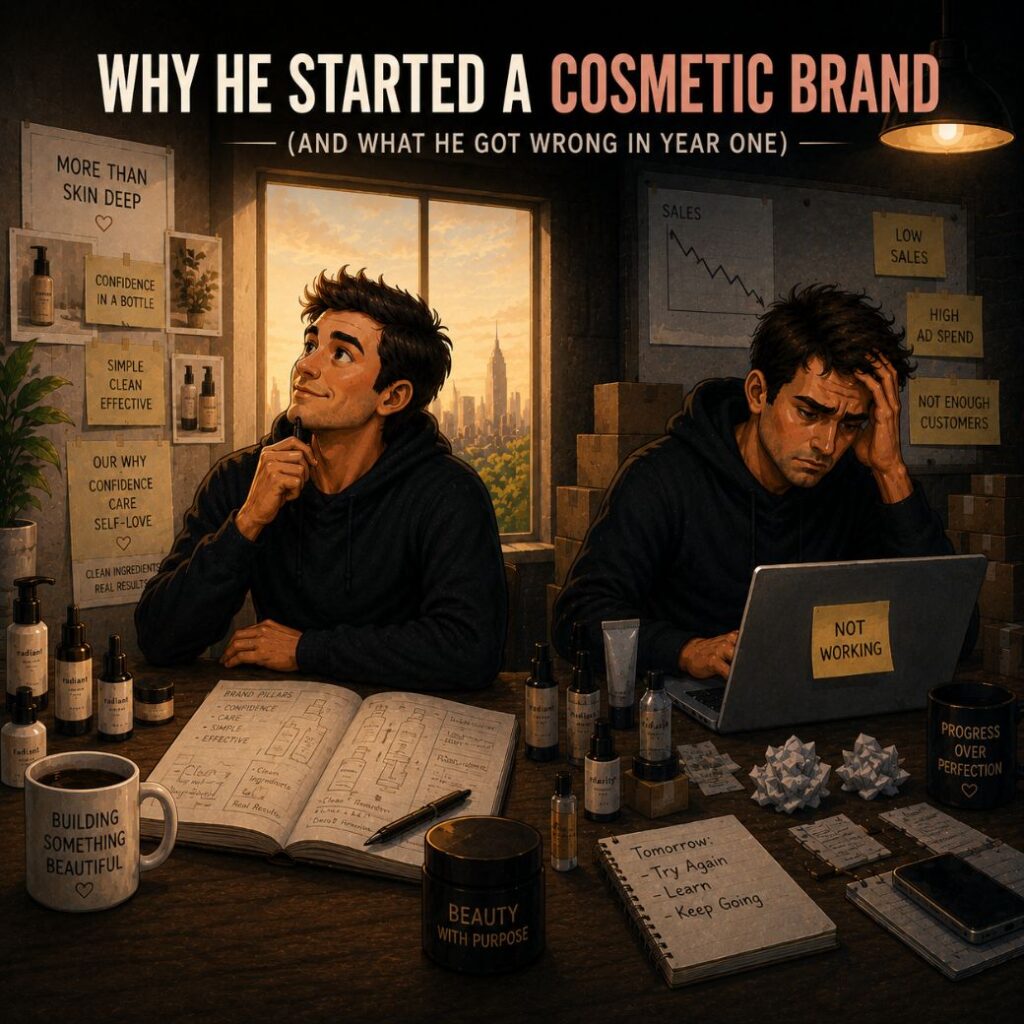
A founder’s candid story of obsessive formulation, expensive packaging mistakes, and the hard lessons no one warns you about when building a skincare company.
We met him at a packaging trade show in Mumbai last year. He was standing in front of an airless pump display, asking questions most seasoned buyers don’t think to ask. His brand, a clean skincare line for melanin-rich skin, had just turned two years old. But what he shared over coffee that afternoon was really a story about year one.
With his permission, we’re sharing it here. Because if you’re a skincare founder right now, bootstrapped, overwhelmed, figuring it out, this story is for you.
It started with frustration
He didn’t set out to build a business. He set out to solve his own skin problem. Years of hyperpigmentation, an unreliable skin barrier, and a bathroom shelf full of products that promised everything and delivered very little. The formulas he needed either didn’t exist for Indian skin tones or were imported and priced out of reach.
So he started learning. Cosmetic chemistry. Ingredient databases. pH charts. He connected with a formulation consultant and eventually had something he believed in: a Vitamin C serum and a barrier-repair moisturiser, made for skin like his.
And then he made his first mistake.
Mistake 1
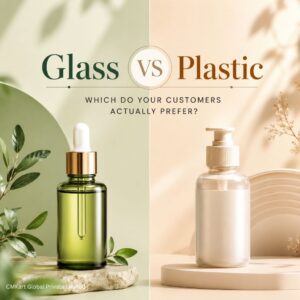
The clear glass dropper bottle looked stunning. Minimal. Premium. Exactly the aesthetic he had in mind. What he didn’t fully understand at the time: Vitamin C, specifically L-ascorbic acid, is one of the most unstable actives in skincare. It oxidises rapidly when exposed to light and air. Clear glass is essentially a display case for degradation.
The packaging lesson
For high-potency actives like Vitamin C, retinol, and peptides, your packaging is not a container; it is a preservation system. Amber or opaque bottles, UV-protective coatings, and airless pump mechanisms exist for a reason. Companies build airless and airtight delivery systems specifically engineered to protect ingredient integrity from the moment of fill to the last pump on the customer’s skin.
He scrapped the batch. The cost was significant for a solo founder operating on personal savings. But the education, he says, was worth every rupee.
Mistake 2
Once he had revised packaging specs, switching to UV-protective opaque bottles with an airless pump mechanism. he approached manufacturers. The numbers didn’t work. Most cosmetic packaging suppliers in the mass market segment require MOQs of 5,000 to 10,000 units per SKU before they’ll engage. For a founder launching with two products, that meant significant upfront capital tied to inventory before a single bottle was sold.
Indie founders need to seek out suppliers with flexible MOQs, or work with cosmetic contract manufacturers who bundle formulation and packaging in lower-volume runs. Many established packaging companies have dedicated programmes or local distributors to support emerging brands. Ask specifically about indie or startup tiers before assuming a supplier won’t work with you.
Mistake 3
Clean beauty is not a regulated term. He knew this intellectually, but his early marketing leaned heavily on the language without anchoring it in specifics. When a customer reacted to a “natural” essential oil in his toner and posted about it he had no clear framework to stand behind. No dermatologist sign-off. No defined ingredient exclusion list. No patch test protocol on record.
Safety and efficacy come from science, not language. Before launching, invest in third-party dermatological testing, define your own ingredient standards in writing, and build your claims around evidence not trends. Natural does not mean hypoallergenic. Chemical does not mean harmful. Know the difference and teach it to your customers.
What year two looked like
He quietly relaunched the same two products, reformulated, repackaged, with proper documentation. This time he worked with a cosmetic chemist from the start of the revision process, not after the fact. He partnered with a packaging supplier who understood active skincare chemistry, not just aesthetics. He got derm-tested. He built a small but intensely loyal customer base by being transparent about every ingredient decision.
His brand is still small. Deliberately so, for now. But it is real, and it works.
At CMKart, we work with skincare founders at every stage — from first-time indie brands sourcing their first 500 units, to scaling DTC labels optimising fill lines. His story is more common than most people admit. And in almost every case, packaging was a decision made too late in the process, or made for the wrong reasons.
If you are building a skincare brand and want to talk packaging compatibility, ingredient stability, or MOQ options — we are here for exactly that conversation.