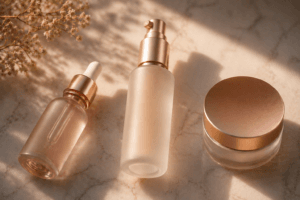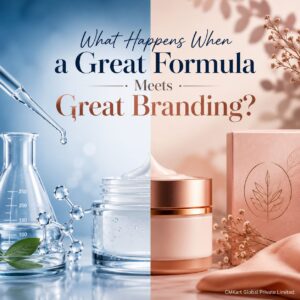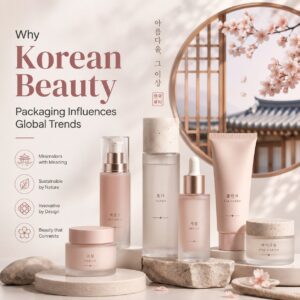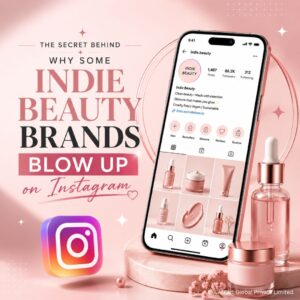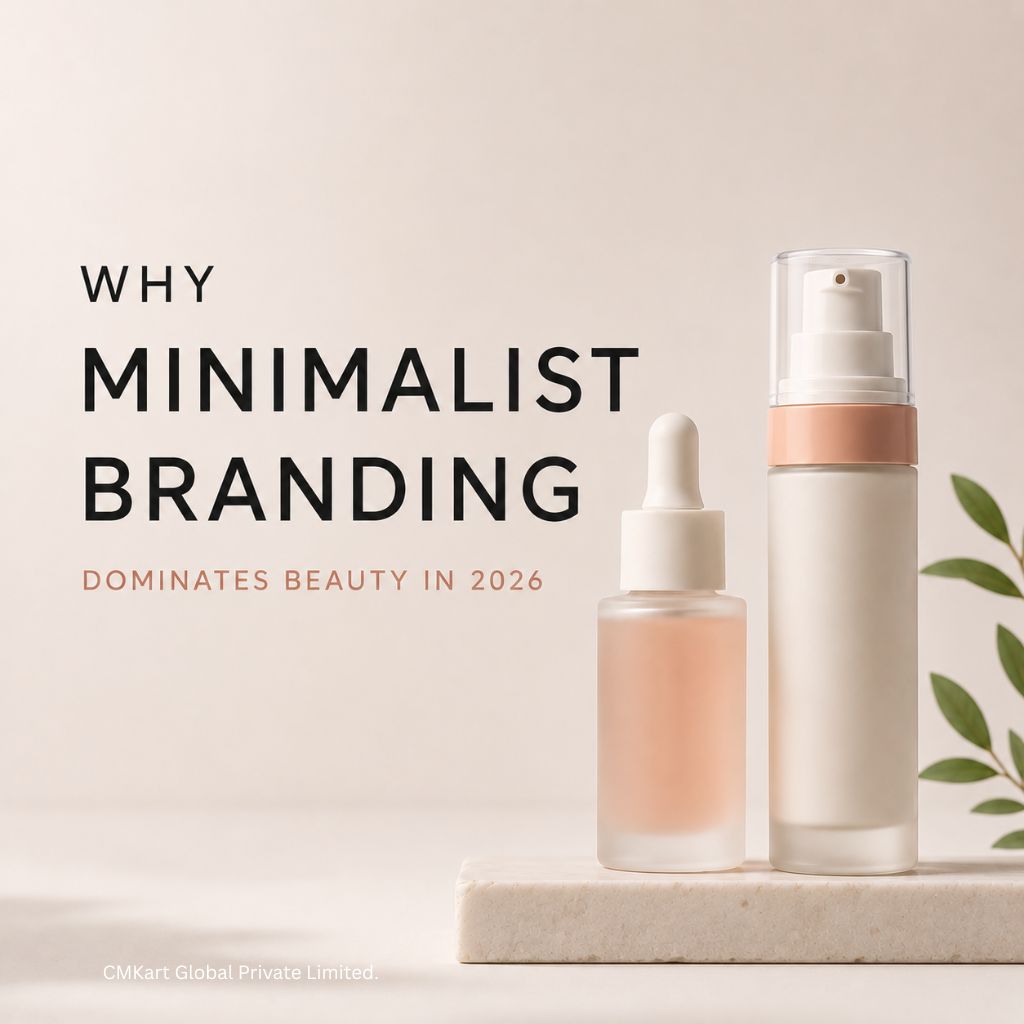
The beauty shelf has never looked quieter or spoken louder. In 2026, the brands winning hearts, wallets, and shelf space are the ones doing less. Less noise. Less clutter. Less everything except intention. Walk into any premium retailer today and the pattern is unmistakable: the products that stop you aren’t the loudest ones. They’re the ones that hold their silence with confidence.
This isn’t a passing aesthetic trend or a seasonal mood board reset. It’s a fundamental rethinking of what beauty branding is actually for. After years of escalating visual complexity, crowded labels, competing claims, infinite variations, the industry has reached a point of collective exhaustion. Consumers are done being sold to. They want to be understood. And the brands that have grasped this truth early are quietly rewriting the rules of what it means to stand out in one of the world’s most competitive categories.
01. The Shift
From Maximalism to Meaning
For years, beauty brands competed loudly bold patterns, metallic finishes, neon type, a dozen claims crowding every label. The logic was simple: more visual noise meant more shelf presence. But consumer behaviour has shifted dramatically.
Today’s beauty consumer is more informed, more intentional, and far more skeptical of artifice. They don’t want to be shouted at. They want to be trusted. And trust, it turns out, looks a lot like restraint.
When a brand removes the unnecessary, what remains feels inevitable and that inevitability reads as confidence.
Minimalist branding taps into something deeper than aesthetics. It signals that a brand has done the work, that the product can speak for itself, and that there’s nothing to hide behind the design.
02. The Numbers
The Market Is Voting with Its Wallet
The commercial evidence is hard to ignore. Across the beauty category, brands that embraced clean, minimal identity systems have consistently outperformed their maximalist counterparts in both customer retention and new customer acquisition.
- 67% of Gen Z shoppers say packaging simplicity signals product quality.
- 3× higher social shareability for minimal packaging vs. busy designs.
- 41% of beauty consumers say they distrust brands with overcrowded labels
The “shelfie” culture on social media has also played a pivotal role. A minimal, cohesive product sits beautifully in a flat lay and free user-generated content is the most powerful marketing engine a beauty brand can have in 2026.
03. Who’s Leading
The Brands Setting the Standard
The minimalist revolution didn’t happen overnight. A handful of brands catalysed the shift, proving that restraint isn’t a compromise, it’s a competitive advantage.
What unites them is a clear visual philosophy: a single dominant typeface, near-monochromatic palettes, generous white space, and an almost radical insistence on legibility over decoration. Each feels like a considered edit rather than a designed-by-committee compromise.
Aesop built an entire empire on the notion that the store, the bottle, and the brand voice should feel as deliberate as the formulations inside. Nécessaire brought clinical minimalism to body care and helped redefine what “luxury” looks like at the drugstore price point.
04. The Psychology
Why Less Feels Like More
There is solid psychological grounding for why minimalist branding resonates so deeply in the current climate. We live in an era of chronic overstimulation infinite scroll, notification culture, algorithmic content floods. The brain is exhausted.
When a product offers visual calm, it creates an immediate emotional reward. The consumer doesn’t have to work to understand the brand. Everything is clear, composed, and confident. That ease of comprehension is deeply pleasurable and pleasure drives purchase.
Simplicity is not the absence of clutter, it’s the presence of clarity. And clarity, in 2026’s beauty market, is the most disruptive thing a brand can offer.
There’s also the element of perceived sophistication. Across most categories – fashion, architecture, automotive restraint has long been the language of premium. Beauty brands have finally caught up to that truth.
05. The Principles
What Minimalist Beauty Branding Actually Looks Like
Minimalism in branding is often misunderstood as simply “using white backgrounds.” True minimalist branding is far more considered and more demanding than that. It’s the discipline of making every single element earn its place.
The Core Principles
- A single, purposeful typeface usually geometric or humanist serif used consistently across every touchpoint
- A colour palette of no more than three values, usually anchored by white, black, or a warm neutral
- Ingredient and benefit communication that is honest and direct, with no marketing hyperbole
- Packaging that is refillable, recyclable, or visually aligned with the brand’s sustainability values
- Photography and visual language that prioritise texture, skin, and material over lifestyle fantasy
- Brand voice that is quiet, assured, and expert never loud, never desperate
The mistake many brands make is treating minimalism as a visual style to adopt rather than a brand philosophy to embody. Consumers are perceptive, they can tell the difference between a brand that is authentically minimal and one that has had minimalism applied as a trend layer over a still-cluttered identity.
06. The Sustainability Link
Clean Design Meets Clean Beauty
One of the most compelling drivers of the minimalist shift is the convergence of aesthetic and environmental values. Less packaging material, fewer printing processes, simpler supply chains minimalist design and sustainability are natural allies.
In 2026, consumers increasingly read visual minimalism as an ethical signal. A pared-back label suggests a brand that has interrogated every excess, both in the formula and in the packaging. It implies a company that asks “is this necessary?” at every stage and means it.
Brands like Krave Beauty have made this link explicit, turning their minimalist aesthetic into a full brand manifesto around ingredient transparency and conscious consumption. The result is a community of consumers who feel personally aligned with the brand’s values loyalty that no loyalty programme can manufacture.
The Future Belongs to the Edited
In 2026, the most powerful thing a beauty brand can say is this: we trust you to get it. No persuasion. No clutter. No noise. Just the product, the truth, and a design confident enough to let both speak.
The brands that understand this aren’t just winning aesthetics awards, they’re building the kind of deep brand affinity that outlasts any trend cycle. Minimalism, it turns out, is the boldest choice of all.