The beauty industry has never been more accessible or more competitive. Here is what the successful founders understood before they launched.
Every week, another beauty brand announces a sell-out launch. Another founder shares her overnight success story. Another independent brand lands a coveted retail partnership that took “only two years” to secure.
What you rarely see is the two years.
The supplier that went silent three weeks before production. The formula that passed every internal test and failed the compliance check. The launch date that moved twice because the supply chain did not care about the content calendar.
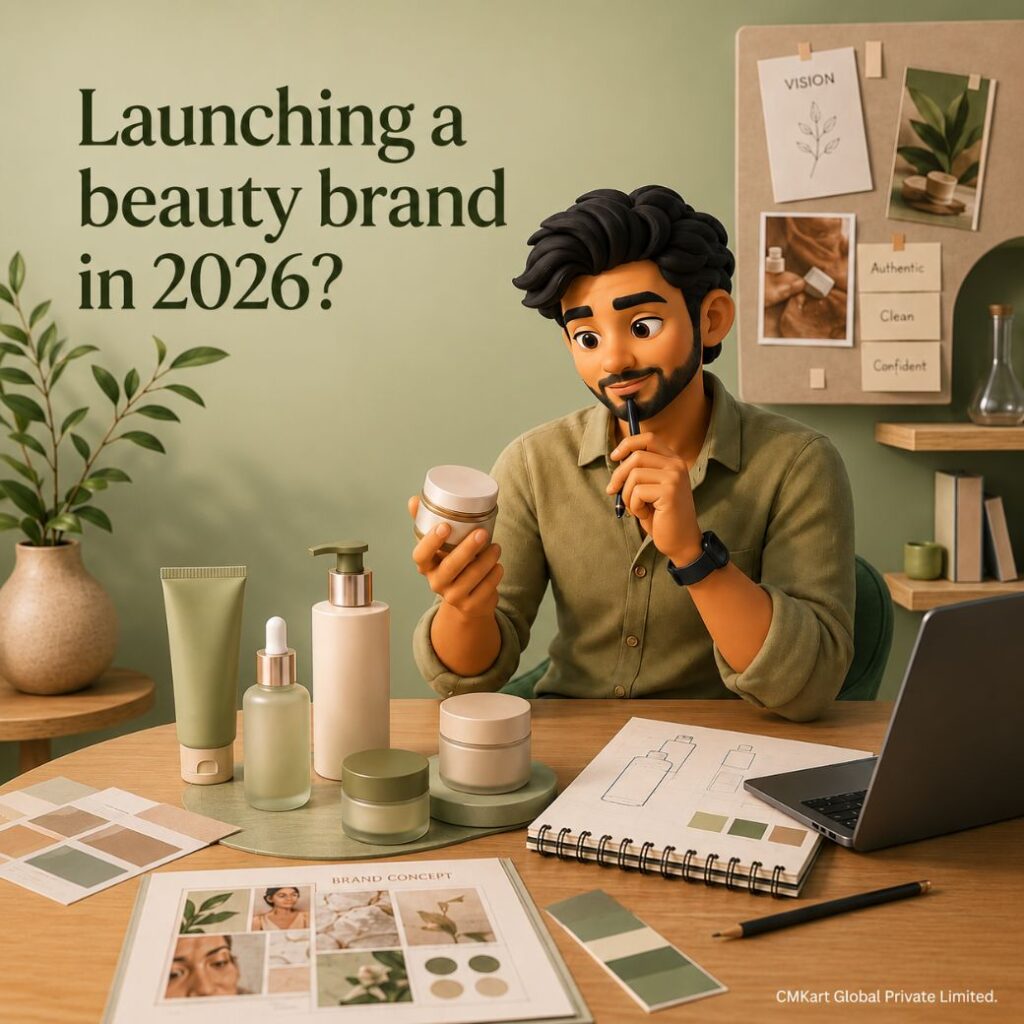
Launching a beauty brand in 2026 is genuinely exciting. The tools, the audiences, the appetite for independent brands all of it is real. But excitement without preparation is how great ideas become expensive lessons.
This is what you need to think about before you begin.
The idea is only the beginning
Most founders arrive with a strong product concept and a clear sense of their customer. That is a good start but it is not a business yet.
A beauty brand is a product, a supply chain, a compliance framework, a customer relationship, and a financial model all operating at the same time. The founders who sustain momentum are the ones who understood this early and built accordingly, rather than discovering it piece by piece under pressure.
Before you spend money on branding or content, spend time mapping the full picture. Who manufactures your formula? Who supplies your components? What regulations govern your category in every market you plan to sell in? How long does it take, realistically, from a confirmed order to a product in a customer’s hands?
These questions are not glamorous. But they are the infrastructure your brand will run on.
Your timeline is probably too short
One of the most consistent patterns among first-time founders is underestimating how long everything takes.
Formulation development, stability testing, safety assessments, regulatory compliance, component sourcing, production sampling, bulk manufacturing, quality control, logistics each of these steps has its own lead time, and they rarely run in perfect sequence.
A realistic timeline from concept to first shipment for a new beauty brand is typically 9 to 14 months. Many founders plan for four to six and find themselves either rushing decisions that should not be rushed, or pushing launch dates and losing momentum.
Build your timeline backwards from your launch date. Then add a buffer. Then add another one.
Your suppliers are partners, not vendors
The relationship you have with your manufacturers, component suppliers, and logistics partners will shape your brand more than most founders expect.
A supplier who communicates proactively, flags potential issues early, and works with you when things go wrong is an asset that is genuinely difficult to replace. A supplier who disappears when there is a problem is a liability that can end a brand.
Vet your suppliers before you need them. Ask about their minimum order quantities, their lead times in peak seasons, their approach to quality control, and how they handle defects. Ask for references. Visit if you can.
The brands that scale are rarely the ones with the cheapest suppliers. They are the ones with the most reliable ones.
Compliance is not optional and it is not simple
Beauty products are regulated. The specifics vary significantly by market, what is permissible in one country may be restricted or prohibited in another. Ingredient lists, labelling requirements, safety documentation, and testing standards all differ across the EU, US, UK, GCC, and other key markets.
Getting this wrong is not just a legal risk. It is a reputational one.
Engage a regulatory consultant early, especially if you plan to sell across multiple markets. Build compliance into your development timeline, not as a final checkpoint but as an ongoing consideration from the moment you begin formulating.
The cost of getting compliance right upfront is a fraction of the cost of getting it wrong after launch.
Your brand identity needs to work harder than your content
In a crowded market, a distinctive brand identity is not a luxury, it is a commercial necessity.
This goes beyond a logo and a colour palette. It is the coherent point of view that runs through every customer touchpoint: the way your product feels in the hand, the language on your website, the experience of receiving an order, the story you tell consistently across every platform.
Consumers in 2026 are sophisticated. They can identify an authentic brand voice from a generic one within seconds. They gravitate towards brands that stand for something specific, that have a clear perspective, that feel genuinely considered rather than assembled from trends.
Invest in brand strategy before you invest in brand execution. Know exactly what you stand for, who you are speaking to, and why your brand exists beyond making a profit. That clarity will make every downstream decision from product development to marketing to partnerships significantly easier.
The digital landscape rewards depth, not just volume
It has never been easier to reach an audience. It has also never been noisier.
Many new brands make the mistake of spreading their content efforts across every platform simultaneously, producing high volumes of content with limited impact on any single channel. The brands that build genuine communities tend to do the opposite, they go deep on one or two platforms, develop a consistent and recognisable presence, and build trust over time before expanding.
Understand where your customer actually spends time and what she responds to. Then show up there, consistently and with genuine value, before you try to be everywhere at once.
Retail readiness is a different discipline from DTC success
Selling direct-to-consumer and selling through retail are fundamentally different businesses. A brand that performs well on its own website does not automatically translate to retail success and pursuing retail before you are ready can do more harm than good.
Retailers evaluate brands on margin, velocity, brand equity, operational reliability, and the ability to support sell-through with marketing investment. They want partners who understand the commercial model, not just founders with great products.
If retail is in your roadmap and for many brands it should be, start building towards it from day one. Understand the margin requirements. Know your price architecture. Develop the sales materials and the data story you will need to make the conversation worthwhile.
Retail relationships take time to build. The groundwork you lay in year one often determines the conversations you can have in year two and three.
Capital planning is the conversation most founders avoid
Launching a beauty brand requires more capital than most first-time founders anticipate, and the timing of cash outflows rarely aligns with the timing of cash inflows.
You will spend on formulation, compliance, components, production, branding, and marketing before a single sale is made. Once you begin selling, inventory cycles, payment terms, and growth reinvestment will keep cash tight for longer than feels comfortable.
Have an honest conversation with yourself and ideally with a financial adviser about how much capital you actually need, where it is coming from, and what your path to sustainability looks like. Brands that run out of runway before they find their footing rarely get a second chance.
The founders who succeed start before they feel ready
There is a version of preparation that becomes procrastination. Waiting until everything is perfect, every question answered, every risk mitigated that brand never launches.
The founders who build lasting businesses are not the ones who had everything figured out. They are the ones who knew enough to move forward, stayed curious enough to keep learning, and built the right relationships early enough to have support when they needed it.
2026 is a strong moment to launch a beauty brand. Consumer appetite for independent, values-driven brands is real and growing. The infrastructure to support emerging brands from manufacturing to distribution to marketing is more accessible than it has ever been.
But the window for thoughtful preparation is now.
If you are in the process of building your brand and want to talk through what the road ahead looks like, we work with founders at every stage , from early concept to first shipment and beyond. Reach out, and let’s have a real conversation.
One more thing: your packaging is part of the story too
Every decision covered in this blog, your brand identity, your retail readiness, your customer’s first impression ultimately meets the physical world in one place: your packaging.
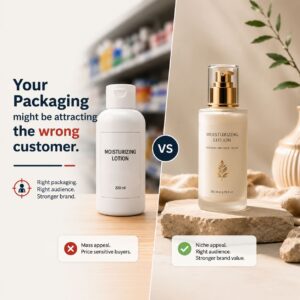
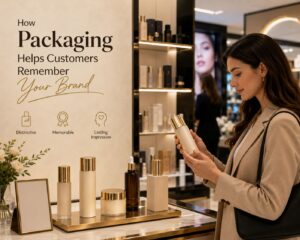
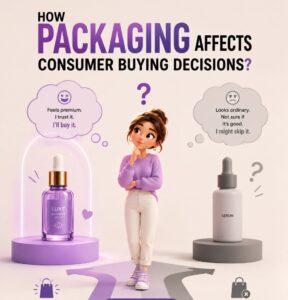
Packaging is where your brand strategy becomes tangible. It is the first thing a retailer notices on a buyer’s desk, the first thing a customer touches before she has read a single word about you, and the single most visible signal of whether your brand is built to last or built in a hurry.
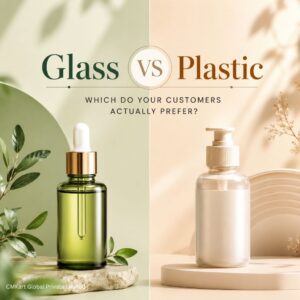
CMKart Global Private Limited works with beauty brands at every stage of their journey from early-stage founders choosing their first components to established brands scaling into new markets. We help you navigate material selection, sustainable options, lead times, MOQs, and retail compliance, so your packaging works as hard as every other part of your brand.
If you are launching in 2026 and want a packaging partner who understands the full picture not just the components, we would love to be part of your journey.
Get in touch: Linkedin