The beauty industry produces a significant amount of packaging waste every year, much of it designed for single use. Bottles, jars, tubes, and caps often move from shelf to bin within weeks of purchase, and a large share of that material ends up in landfills rather than being recovered or reused. As awareness around this issue grows, more brands are looking at how their packaging choices affect the environment, not just at the point of purchase, but well after the product itself is finished.
This shift has brought the idea of a circular economy into everyday conversations within the beauty industry. Rather than treating packaging as something that is used once and discarded, a circular approach looks at how materials can be reduced, reused, or recycled to minimize waste. It reframes packaging as part of a longer lifecycle, one that includes how a product is manufactured, how it is used, and what happens to it once it is empty.
For beauty brands, this means rethinking packaging decisions much earlier in the product development process. Instead of treating sustainability as a feature added on after a product is finalized, circular economy thinking asks brands to consider material choices, refill potential, and end-of-life recyclability from the very start of the sourcing process. This can be a significant shift for brands accustomed to prioritizing shelf appeal or cost above all else, but it is increasingly becoming a baseline expectation rather than an optional add-on.
What Is a Circular Economy in Beauty Packaging?
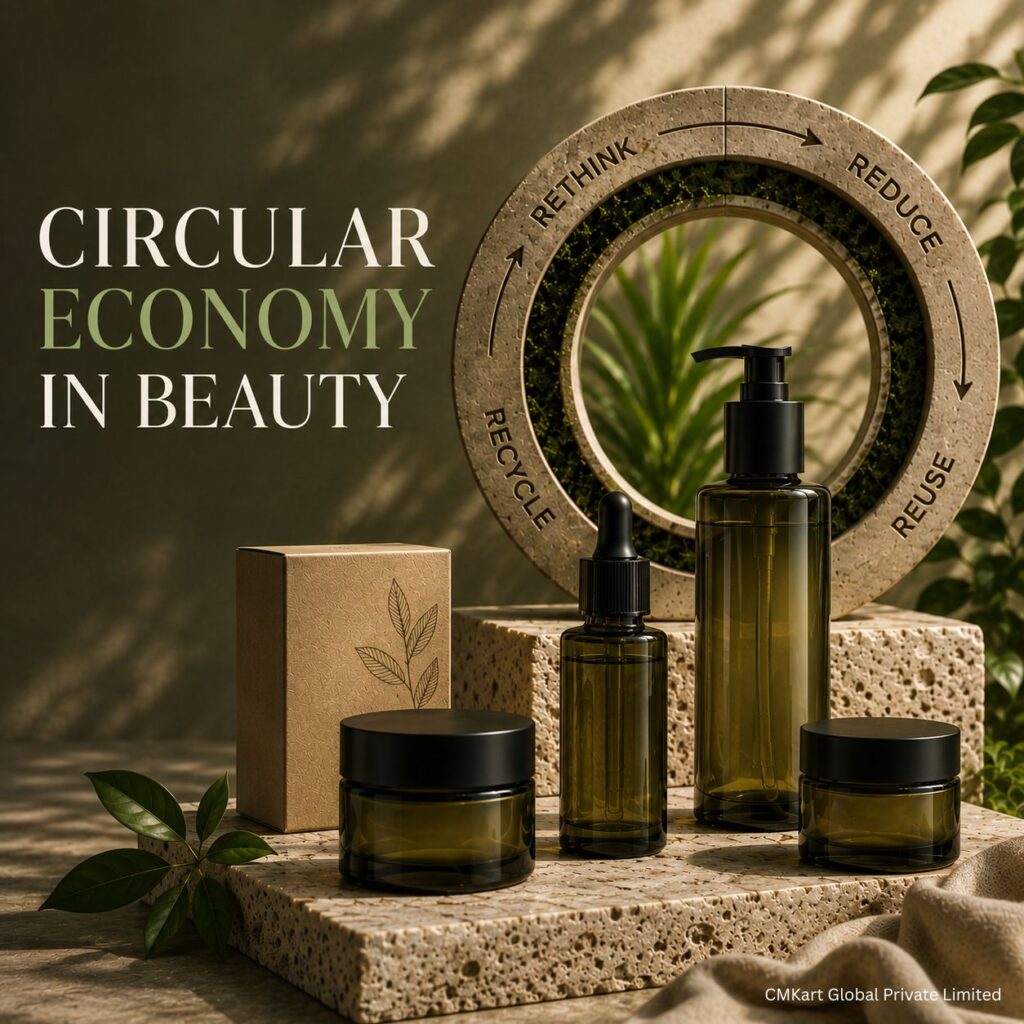
A circular economy is built around four core principles: rethink, reduce, reuse, and recycle. Applied to beauty packaging, these principles look like this:
- Rethink: Reconsidering packaging formats and materials at the design stage, before manufacturing decisions are finalized
- Reduce: Using less material overall, such as thinner walls, smaller components, or removing unnecessary layers of packaging
- Reuse: Designing refillable containers that allow a single package to be used across multiple purchases
- Recycle: Choosing mono-material designs and separable components that are easier to process through recycling systems
Together, these principles aim to extend the life of packaging materials and reduce the amount of waste that ends up in landfills.
Why This Matters for Beauty Brands
Consumer expectations around sustainability have shifted in recent years. Many buyers, particularly younger consumers, now consider a product’s environmental impact as part of their purchasing decision. This includes looking at whether packaging can be refilled, recycled, or responsibly disposed of.
Regulatory changes in various markets have also pushed packaging design in this direction, with some regions introducing requirements around recyclability and extended producer responsibility.
For brands, this means packaging is no longer just a functional or aesthetic decision. It is increasingly part of a broader conversation about how a product fits into a more sustainable supply chain.
Practical Considerations for Adopting Circular Packaging
Brands exploring circular packaging options typically need to evaluate a few practical factors:
- Whether a container can be refilled without damaging its structure or finish
- Whether caps, pumps, and other components can be separated from the main container for recycling
- Whether the packaging material is actually accepted by recycling infrastructure in the markets where the product is sold, rather than being recyclable only in theory
- How packaging changes might affect production costs, timelines, and supplier relationships
- Whether existing branding, labeling, and printing methods are compatible with recycled or recyclable materials
- How consumers will be informed about proper disposal or return of packaging, since circular systems often depend on consumer participation
These considerations are generally easier to address at the sourcing and design stage rather than after a product has already launched. Making changes to packaging after launch often involves higher costs, longer lead times, and coordination with existing suppliers who may not have experience with circular materials.
Common Challenges Brands Face
Adopting circular packaging is not without its difficulties. Refillable systems, for example, often require a different container design than standard single-use packaging, which can increase upfront tooling costs. Recyclable materials may also be more expensive or harder to source in certain regions, depending on local manufacturing capabilities.
Communication is another challenge. Even well-designed circular packaging only works if customers understand how to use it, whether that means returning a container, using a refill pouch correctly, or knowing which parts of the packaging are recyclable. Brands often need to invest in clear labeling and customer education alongside the packaging itself.
Getting Started
Brands interested in circular packaging often begin by reviewing their current packaging portfolio and identifying where changes are feasible. This can include switching to mono-material components, introducing refill options for existing product lines, or working with suppliers who have experience in sustainable packaging design.
A useful starting point is to prioritize a small number of high-volume products rather than attempting to redesign an entire packaging line at once. This allows a brand to test refill systems, gather customer feedback, and refine the approach before scaling it more broadly.
Since packaging decisions are typically made during sourcing, this is often the most practical point to introduce circularity into a brand’s overall approach.
CMKart works with beauty brands on packaging sourcing, including options aligned with circular economy principles. If you’re evaluating packaging for an upcoming launch, this is a conversation worth having early in the process.