Scroll through any beauty hashtag on Instagram or TikTok right now, and you’ll notice something interesting. The unboxing videos, the “get ready with me” routines, and the minimalist flat-lays of skincare shelves a huge portion of what’s trending traces back to one place. South Korea.
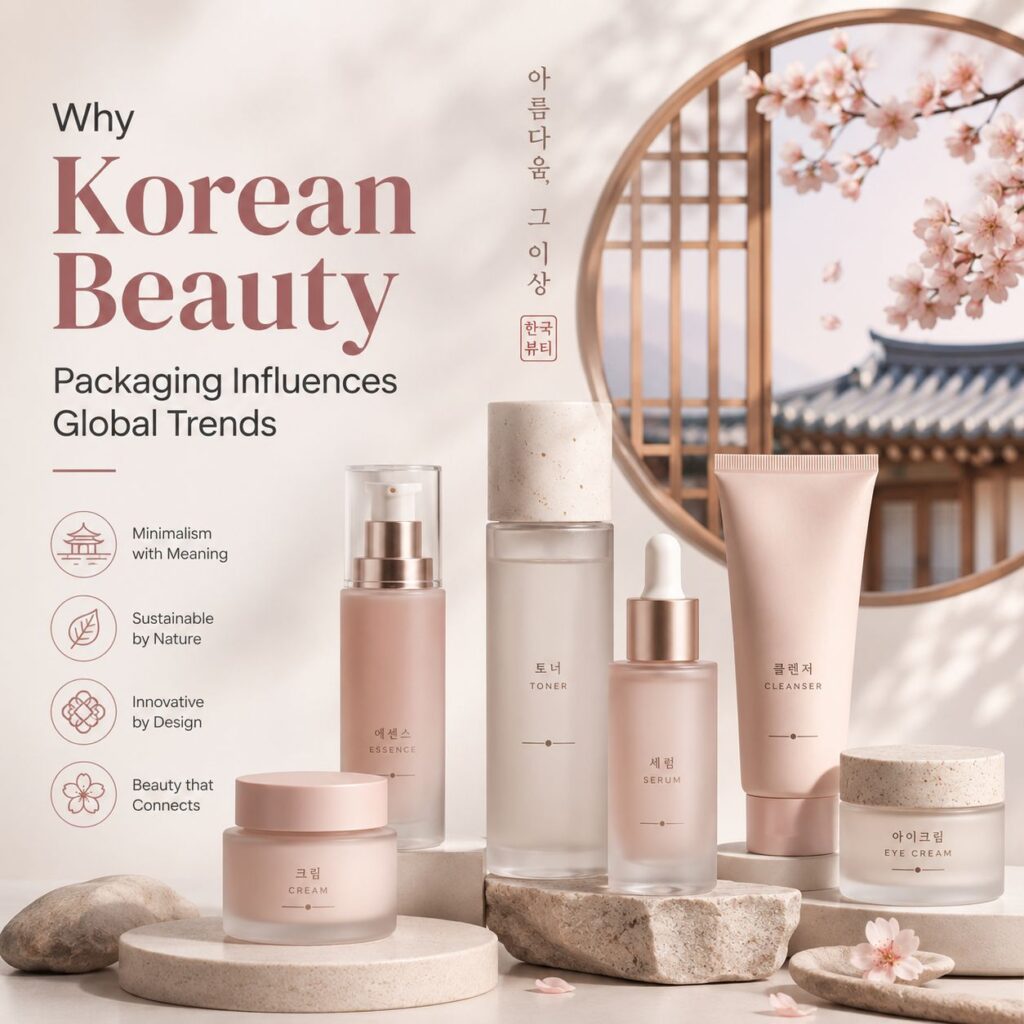
It’s not just the formulas. K-beauty’s biggest export to the rest of the world has quietly been its packaging. Cushion compacts that went viral years before “viral” was even a beauty marketing term. Slim, clinical-looking ampoule bottles that turned serums into something people genuinely look forward to using. Pastel jars and tubes that somehow make skincare feel both serious and fun at the same time.
If you’ve scrolled past any of this online, chances are you have. You’ve already been influenced by Korean packaging design, whether you noticed it or not. For founders and emerging brands trying to stand out in a feed full of competitors, understanding why this happened isn’t just a fun rabbit hole. It’s a genuinely useful strategy.
So let’s break down what actually makes Korean beauty packaging so influential, and more importantly, what founders building a brand today can take from it.
The Quiet Influence Behind Every Beauty Shelf
Open Sephora’s website, scroll an Ulta haul video, or browse a D2C Instagram store, and you’ll see fingerprints of Korean packaging innovation everywhere. None of this happened by accident. South Korea’s beauty industry has spent over a decade treating packaging as a core part of product development equal in importance to the formula itself.
For founders building a brand today, that’s the single most valuable lesson K-beauty has to offer.
Why This Matters for New Founders
Early-stage beauty brands don’t have the luxury of a 50-year legacy or instant consumer trust. Your packaging has to do more work, faster communicating quality and personality within seconds, often through a phone screen, before anyone ever touches the product in person.
Many of today’s most recognisable K-beauty names started as small, independent brands. They won global attention not through bigger marketing budgets, but through packaging that made products instantly desirable, shareable, and trustworthy online.
“Korean beauty brands didn’t out-spend the competition. They out-designed it. That’s a strategy any founder can apply, regardless of budget.”
The Innovations That Changed Global Packaging
The cushion compact solved a real consumer problem – convenience without mess and created an entirely new category now standard across global beauty brands. The lesson: solving a genuine usability problem through packaging can differentiate a brand more than any campaign ever could.
The ampoule and dropper bottle turned serum application into a daily ritual, signalling potency and justifying premium pricing on small-volume formulas. Sheet mask packaging proved single-use, travel-friendly formats could become an entire category on their own a genuine rethink, not a gimmick.
What Founders Should Actually Take Away
It’s tempting to focus purely on the aesthetic pastel colours and cute branding. But the real lesson is sequencing. Most markets finalise the formula first and treat packaging as a logistics problem to solve right before launch. Korea’s top brands develop packaging and formula in parallel, informing each other from the very start.
This prevents costly rework later and ensures the final product feels cohesive rather than assembled at the last minute.
How to Apply This Without a Korean-Sized Budget
Identify one genuine friction point in how customers use your product category, and ask whether packaging – not just formula, could solve it. Choose a format that reflects the ritual you want customers to experience online and offline; a dropper signals something different than a pump and a jar different than a tube.
Work with a packaging partner who understands both manufacturing and brand strategy early. Brands that get this right from day one spend less time fixing mistakes later and more time building the kind of loyalty that shows up in repeat orders and organic shares.
“For early-stage beauty brands, packaging is one of the few areas where smart strategy can outperform a bigger budget.”
The Bottom Line
Korean beauty packaging became globally influential because it solved real problems and treated packaging as a strategic extension of the product – not an afterthought. New founders don’t need to imitate the pastel aesthetic. They need to imitate the discipline: design packaging alongside the formula from day one.